Taswar Bhatti
Practical guides on AI agents, LLM security, C#/.NET and Cloud, from Taswar Bhatti
Tag: LLM
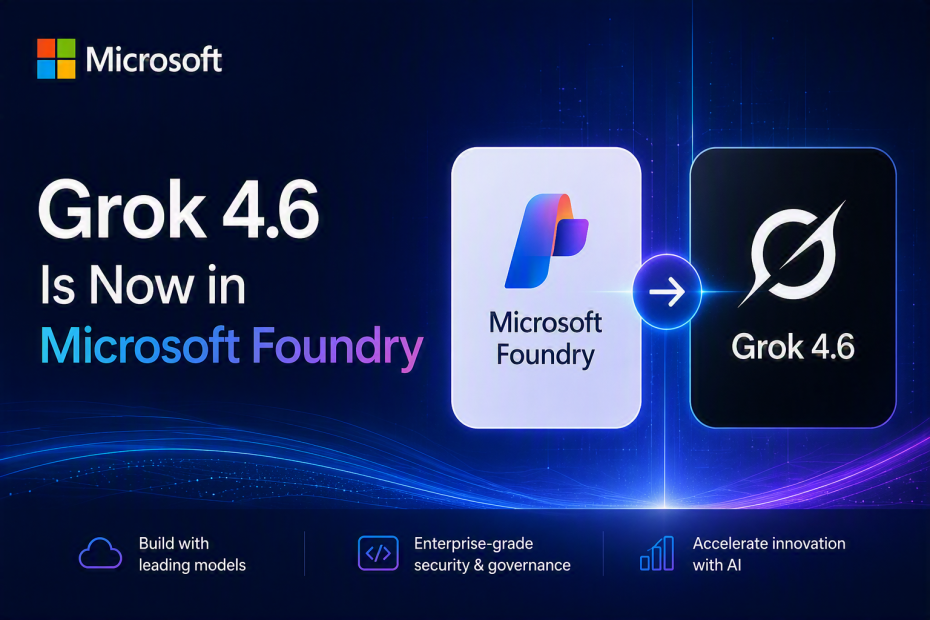
Grok 4.6 for CSharp Developers Agentic AI in Microsoft Foundry

Grok 4.6 — SpaceXAI’s latest frontier model — just landed in public preview in Microsoft Foundry as an Azure Direct Model. The headline isn’t “another big model dropped.” It’s that Grok 4.6 is built specifically for long-horizon, agentic work: planning across many steps, calling tools reliably, recovering when something goes wrong, and handing you a finished work product instead of a half-baked fragment you have to stitch together yourself.

That’s a meaningfully different design target than “answer this one prompt well.” And it’s exactly the kind of thing that matters once you move past demos and start building agents that actually have to survive contact with real workloads.

As always: no Python required, no notebook required. Just Microsoft.Extensions.AI and dotnet run.

What Grok 4.6 Actually Is

A few things worth knowing before you touch any code:

  • Frontier reasoning at
… Read the rest “Grok 4.6 Is Now in Foundry — Here’s What It Means If You Write C#”
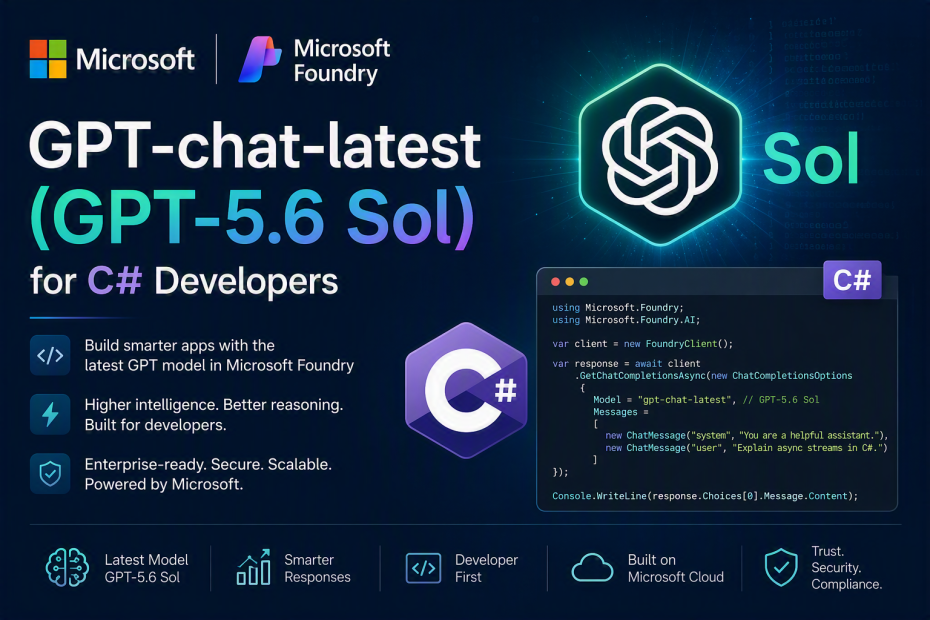
GPT-chat-latest (GPT-5.6 Sol) for C# Developers

Microsoft has a habit of quietly upgrading the model behind a stable endpoint name instead of forcing everyone to migrate to a new one. That’s exactly what just happened with GPT-chat-latest — it’s now built on GPT-5.6 Sol, and if you’re already pointing at GPT-chat-latest in Microsoft Foundry, you get the upgrade without touching a line of code.

If you’re not already using it, this is a good moment to start. Here’s what changed, why it matters, and — because I don’t do AI posts without something you can actually run — a working C# sample.

What Actually Changed

A few things worth knowing before you touch any code:

  • Same endpoint, better model underneath.. For gpt-5.6-sol You don’t select a new model name — you just get the improved behavior through the same integration path you already have.
… Read the rest “GPT-5.6-Sol for C# Developers”

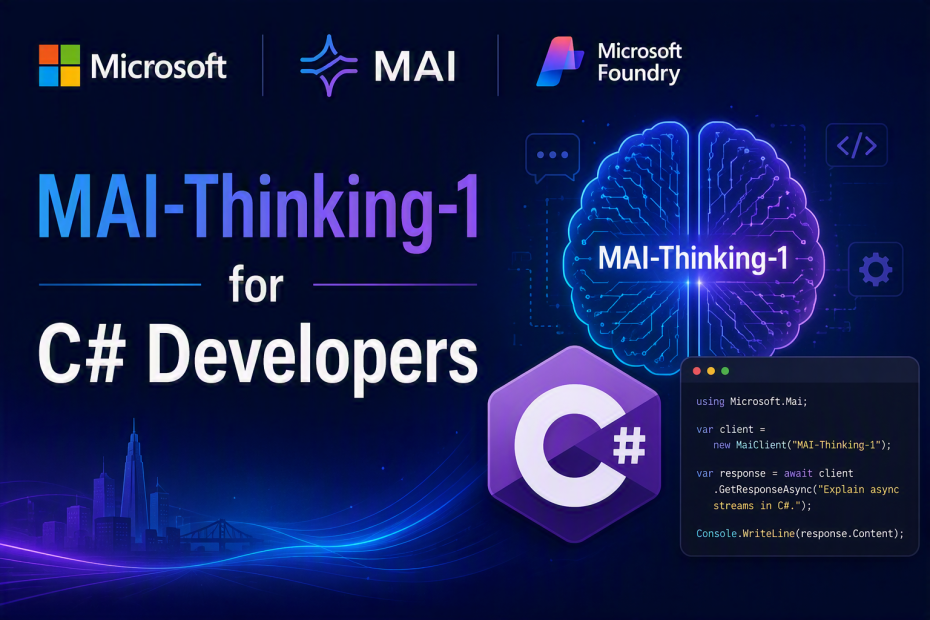
Every time Microsoft ships a new model into Foundry, I ask myself the same boring-but-important question: does this change anything for the way I actually write code? Most of the time the answer is “cool demo, doesn’t affect my day job.” This time it’s different.

MAI-Thinking-1 — Microsoft’s first reasoning model — just went into public preview in Microsoft Foundry. It’s not a chat model with a “think harder” flag bolted on. It’s built from the ground up for multi-step reasoning: the kind of work where the model has to plan, reconsider, call tools, and stitch together a long chain of context before it gives you an answer worth trusting.

If you’ve read anything else I’ve written, you know where this is going: no Python required, no notebook gymnastics, just Microsoft.Extensions.AI and a dotnet run.

What MAI-Thinking-1 Actually Is

… Read the rest “MAI-Thinking-1 Is Now in Foundry — Here’s What It Means If You Write C#”
Kimi K2.7 Code is Now Available in Microsoft Foundry

Demo code located at https://github.com/taswar/KimiFoundryDemo

There are a lot of AI model announcements these days. But every now and then one lands that feels immediately practical for real engineering work.

Kimi K2.7 Code from Moonshot AI showing up in Microsoft Foundry feels like one of those releases.

Microsoft and Moonshot AI have made Kimi K2.7 Code available in the Foundry model catalog starting July 1, 2026. It is designed for the kind of software engineering that does not happen in a single prompt — multi-file refactors, feature work spanning multiple services, debugging sessions that need to hold context across many steps.

That is a different problem space from “generate a todo app in one shot.” And honestly, that is where most development teams are today.

What Is Kimi K2.7 Code?

Kimi K2.7 Code is a coding-focused model from Moonshot AI. … Read the rest “Kimi K2.7 Code is Now Available in Microsoft Foundry”

Cohere Command A-Plus Lands in Microsoft Foundry

Sample code located at https://github.com/taswar/CohereCommandAPlusDemo

Enterprise AI teams have a familiar problem. You need multilingual support because your users are in Germany, Japan, and Brazil. You need document understanding because half your data lives in scanned PDFs and screenshots. You need tool calling because your agents have to actually do things, not just talk about them. And you need reasoning across long contexts because business decisions rarely fit in 4K tokens.

Historically, that meant stitching together three or four models. One for translation. One for OCR. One for reasoning. Something in the middle to orchestrate all of it. That is a lot of moving parts to keep in production.

Cohere Command A+ in Microsoft Foundry is designed to collapse that stack.

Announced as a Direct from Azure model, Command A+ is Cohere’s latest open enterprise model — and their first … Read the rest “Stop Stitching Models Together — Cohere Command A+ Lands in Microsoft Foundry”

UA-4524639-2